
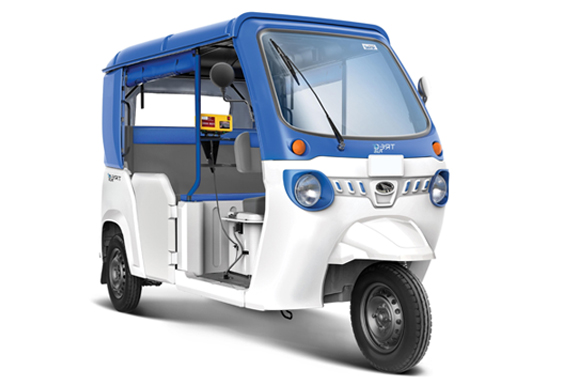
Benefits of Swappable Batteries in 3-Wheel Rickshaws
This presentation explores the advantages of swappable batteries for 3-wheel rickshaws, highlighting their potential to revolutionize urban transportation.

By Anil Yadav
Last edited 5 days ago
The Electric Revolution in Urban Transportation
The global e-rickshaw market is projected to reach $1.3B by 2025, driven by growing demand for sustainable urban mobility.
Transportation-related issues are a major concern for 62% of adults worldwide, emphasizing the need for accessible and efficient solutions.
Swappable batteries offer a compelling solution to key barriers hindering widespread EV adoption.
Reduced Downtime, Increased Earnings
Battery swap takes under 5 minutes, compared to hours of charging, maximizing driver uptime.
Drivers can operate their vehicles 24/7 with minimal interruptions, leading to increased earnings.
Swappable batteries effectively eliminate range anxiety, enabling unlimited driving potential.
Lower Initial Investment
The upfront cost of a swappable battery e-rickshaw can be up to 50% lower compared to traditional models.
Batteries are often offered on a subscription basis, further reducing initial investment for drivers.
For example, the Piaggio Apé E-Xtra LX Max (Swappable) with a 48V Lithium Ion battery presents a compelling cost-effective option.
Enhanced Battery Life and Performance
Swappable batteries utilize advanced Lithium-ion technology, including Prismatic LFP Cells, for increased energy efficiency and longer lifespan.
The CLN L3 battery, with a 5-6kWh range, is AIS 156 Phase-2 Amendment-III certified, ensuring high performance and reliability.
Economic Benefits for Drivers
Drivers experience significant fuel cost reductions by switching from petrol to electricity, a much cheaper energy source.
Reduced maintenance expenses, thanks to the efficient electric drivetrain, contribute to increased profitability.
Companies like IndoFast Energy offer quick battery exchange solutions, completing the process in less than 2 minutes.
Environmental Impact
Swappable battery e-rickshaws operate with zero direct emissions, contributing to cleaner air quality in urban areas.
These vehicles can be integrated with renewable energy sources, further reducing their carbon footprint.
The adoption of swappable battery e-rickshaws supports urban air quality improvement initiatives.
Infrastructure and Scalability
Swap stations can be rapidly deployed, with companies like Ample achieving installation in just 3 days.
Expansion plans are in place, with Hyderabad aiming to establish 100+ swap centers by 2024, demonstrating scalability.
Swappable batteries address the limitations of charging infrastructure, especially in developing areas with limited electricity access.
Technological Advancements
IoT integration enables real-time monitoring of battery performance, usage, and location, optimizing efficiency.
Advanced control systems ensure optimal performance, safety, and operational efficiency of the e-rickshaw.
Future potential for Vehicle-to-Grid (V2G) applications opens possibilities for using batteries as energy storage.
Conclusion: Driving Sustainable Urban Mobility
Swappable batteries represent a key enabler for the widespread adoption of e-rickshaws.
They deliver significant benefits across economic, operational, and environmental domains.
The potential to transform last-mile connectivity in urban areas makes swappable battery e-rickshaws a crucial component of sustainable urban mobility.